Most new EV owners ask the same question soon after they bring the car home. Should you plug into a regular outlet or add a faster charger? Here is a simple look at Level 1 and Level 2 charging from the electricians at Taylor in Puyallup. When you are ready for a home charger, call (253) 208-5315.
The Short Answer
A Level 1 charger plugs into a standard 120-volt household outlet. A Level 2 charger runs on a 240-volt circuit, like the one that powers a dryer or an oven. That higher voltage lets a Level 2 charger fill your battery several times faster.
Both types can charge the same car. The big differences come down to speed, power, and the circuit behind the wall. Let’s walk through each one.
Charging Speed and Power Output
Charging speed depends on how much power reaches your car. Power is measured in kilowatts. More kilowatts means more miles of range added each hour.
Level 1 Charging Speed
A Level 1 charger delivers about 1 to 2 kilowatts. That adds roughly 3 to 5 miles of range per hour. An overnight charge of 10 to 12 hours may add about 40 to 50 miles. That works for short trips but not for long daily drives.
Level 2 Charging Speed
A Level 2 charger for the home usually delivers about 7 to 11 kilowatts. That often adds 20 to 40 miles of range per hour. Most cars can refill from low to full overnight. Your car’s onboard charger sets the top speed it can accept. A powerful wall unit will not push past that limit.
Typical Circuit Requirements
The circuit behind your charger matters as much as the charger itself. Each type has its own needs. A licensed electrician should confirm what your home can support.
Level 1 Circuit Needs
Level 1 charging uses a standard 120-volt outlet. A dedicated 15-amp or 20-amp circuit is best, since EV charging runs for hours at a time. Avoid extension cords. Sharing the circuit with other devices can trip the breaker or overheat the outlet.
Level 2 Circuit Needs
Level 2 charging needs a dedicated 240-volt circuit. Many home chargers use a 40-amp or 50-amp breaker. Code sizes the circuit above the charger’s steady draw, because charging is a long, continuous load. Some chargers plug into a 240-volt outlet. Others are hardwired straight to the circuit.
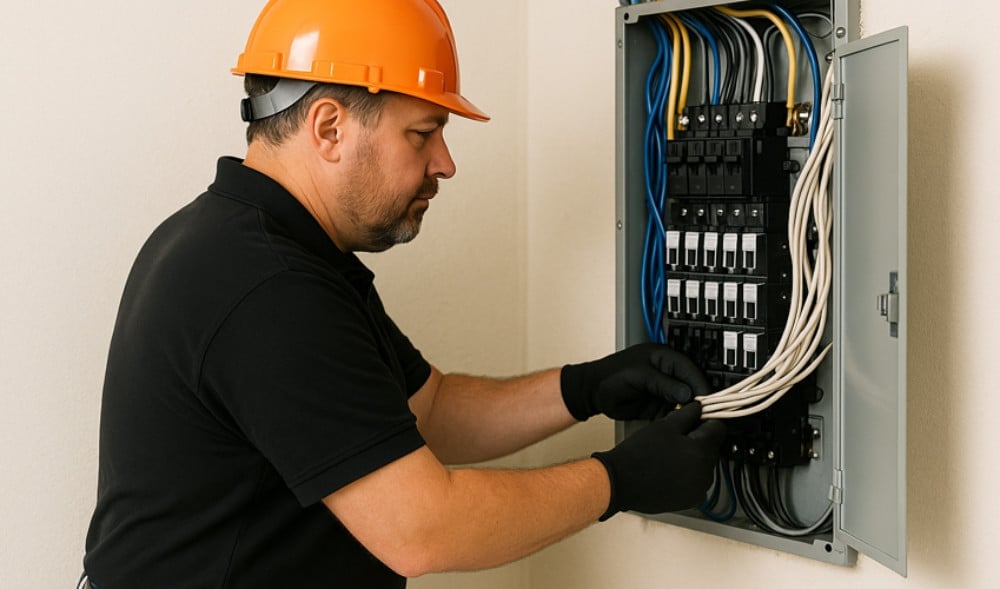
Your panel also needs room for the new load. Older homes may not have enough capacity. Taylor checks this first and can handle panel replacements and upgrades if needed. To learn more, read understanding electrical load and whether your panel is ready.
Best Fit by Vehicle Type
Your car plays a big role in which charger makes sense. Battery size and daily miles shape the choice. Here is how it often breaks down.
Plug-In Hybrids
Plug-in hybrids have smaller batteries and a gas engine for backup. A Level 1 charger can often refill a plug-in hybrid overnight. Many owners find Level 1 is all they need.
Full Battery Electric Vehicles
Full electric cars have much larger batteries. Level 1 charging may not keep up with daily driving. A Level 2 charger is the best fit for most full EV owners. It gets the car ready each morning, even after a long day.
Homes With Two EVs
Two electric cars mean twice the charging. A Level 2 setup helps both cars stay ready. Some smart chargers can share power between two vehicles. The team can help you plan for both cars at once.
Level 1 vs Level 2 at a Glance
Here is a quick side-by-side look. It covers the key features of each charger type.
- Voltage: Level 1 uses 120 volts. Level 2 uses 240 volts.
- Power: Level 1 delivers about 1 to 2 kilowatts. Level 2 delivers about 7 to 11 kilowatts.
- Range per hour: Level 1 adds roughly 3 to 5 miles. Level 2 adds roughly 20 to 40 miles.
- Circuit: Level 1 uses a standard outlet. Level 2 needs a dedicated 240-volt circuit.
- Best fit: Level 1 suits plug-in hybrids and short commutes. Level 2 suits full EVs and longer drives.
How to Choose the Right Charger
Start with your daily miles and your car’s battery size. Then look at your panel and where you park. If you want a deeper look at charger types, read what type of EV charger you need for your home.
Taylor’s electricians install chargers for homes in Puyallup and across Pierce County. The team’s service area also reaches into King County. If you searched for EV charger installation Seattle homeowners can trust, Taylor serves Seattle too. Learn more about EV charger installation and the steps the team follows.
A new charger is also a good time to protect your home’s electronics. Ask about whole-home surge protection at your panel. You can see all of Taylor’s electrical installation, upgrades, and repairs services too.
Talk to Taylor About Home EV Charging
The right charger fits your car, your driving, and your home. Taylor’s licensed electricians can check your panel and help you pick the best setup. Call (253) 208-5315 to plan your home EV charger with the team.